
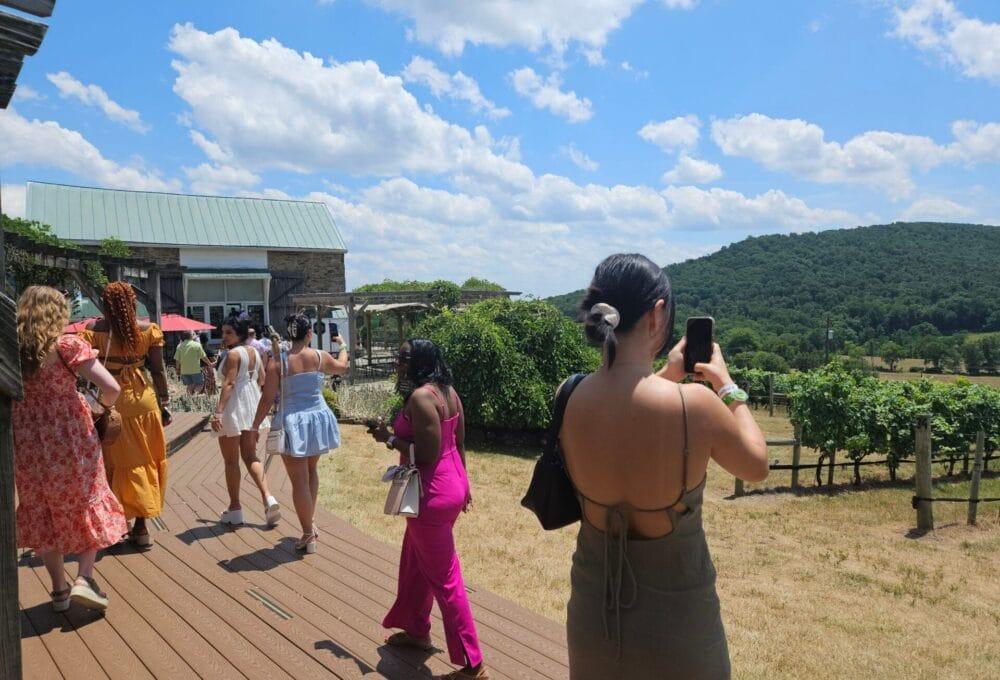
Virginia wine-tour planning guide
Virginia wine tours: choose the right region, pace, and experience.
Virginia wine country stretches from Northern Virginia and the Shenandoah Valley to Charlottesville, the Blue Ridge, and the coast. This practical host helps you decide where to go, how to travel, and whether a scheduled or private tour fits your day.
Statewide figures and regional designations reflect current information published by Virginia Wine.
Start with the map, not a winery list
“Virginia wine country” is not one destination.
The best Virginia wine tour begins by choosing the region that fits your starting point, travel time, and preferred style of day.
Northern Virginia works especially well for day trips from Washington, DC, Maryland, and the surrounding suburbs. Central Virginia and the Monticello area are better suited to travelers building a Charlottesville weekend. The Shenandoah Valley offers a longer, scenic route through mountain towns and a comparatively dry growing area.
Other parts of the Commonwealth, including the Blue Ridge, coastal regions, Southern Virginia, and the Virginia Mountains, offer their own wineries and travel experiences. Trying to compare the entire state as though it were one compact destination usually leads to too much driving and too little time tasting.
Compare the major travel choices
Which Virginia wine region fits your trip?
Each region has a different geography, travel rhythm, and concentration of wineries. Choose the destination before you choose individual stops.
Northern Virginia
Rolling countryside, historic towns, and winery clusters across Loudoun, Fauquier, and nearby areas make this the most practical day-trip region for the DC metropolitan area.
Central Virginia & Monticello
The Charlottesville area combines wineries, food, history, and lodging. It is usually best approached as an overnight getaway rather than a same-day trip from Washington.
Shenandoah Valley
Wineries stretch through a broad valley framed by the Blue Ridge and Allegheny Mountains. The region rewards slower travel and carefully grouped stops.
Blue Ridge, Coast & Beyond
Virginia’s other regions include mountain, coastal, and southern landscapes with family-run wineries, local food, outdoor recreation, and less familiar wine trails.
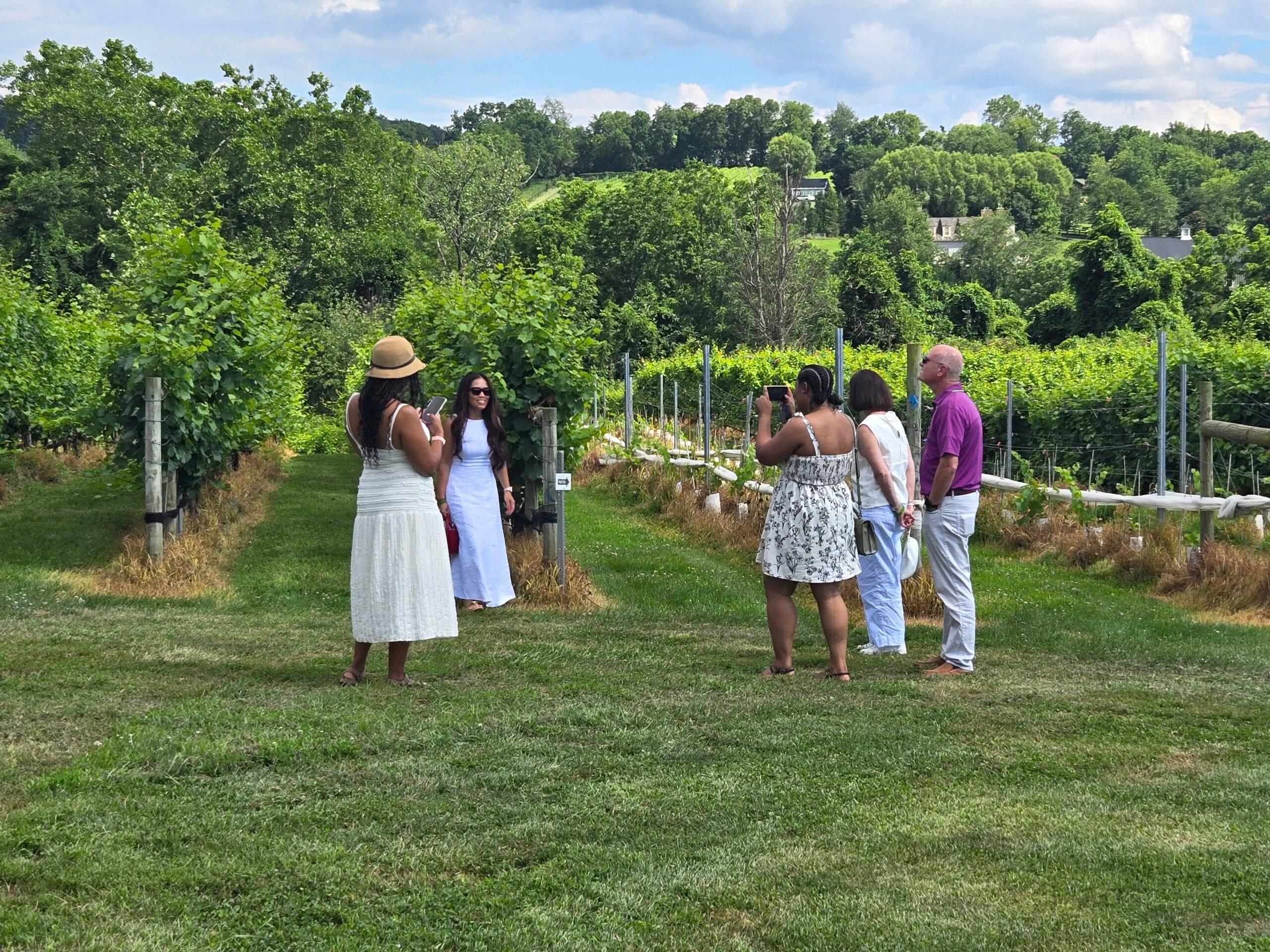
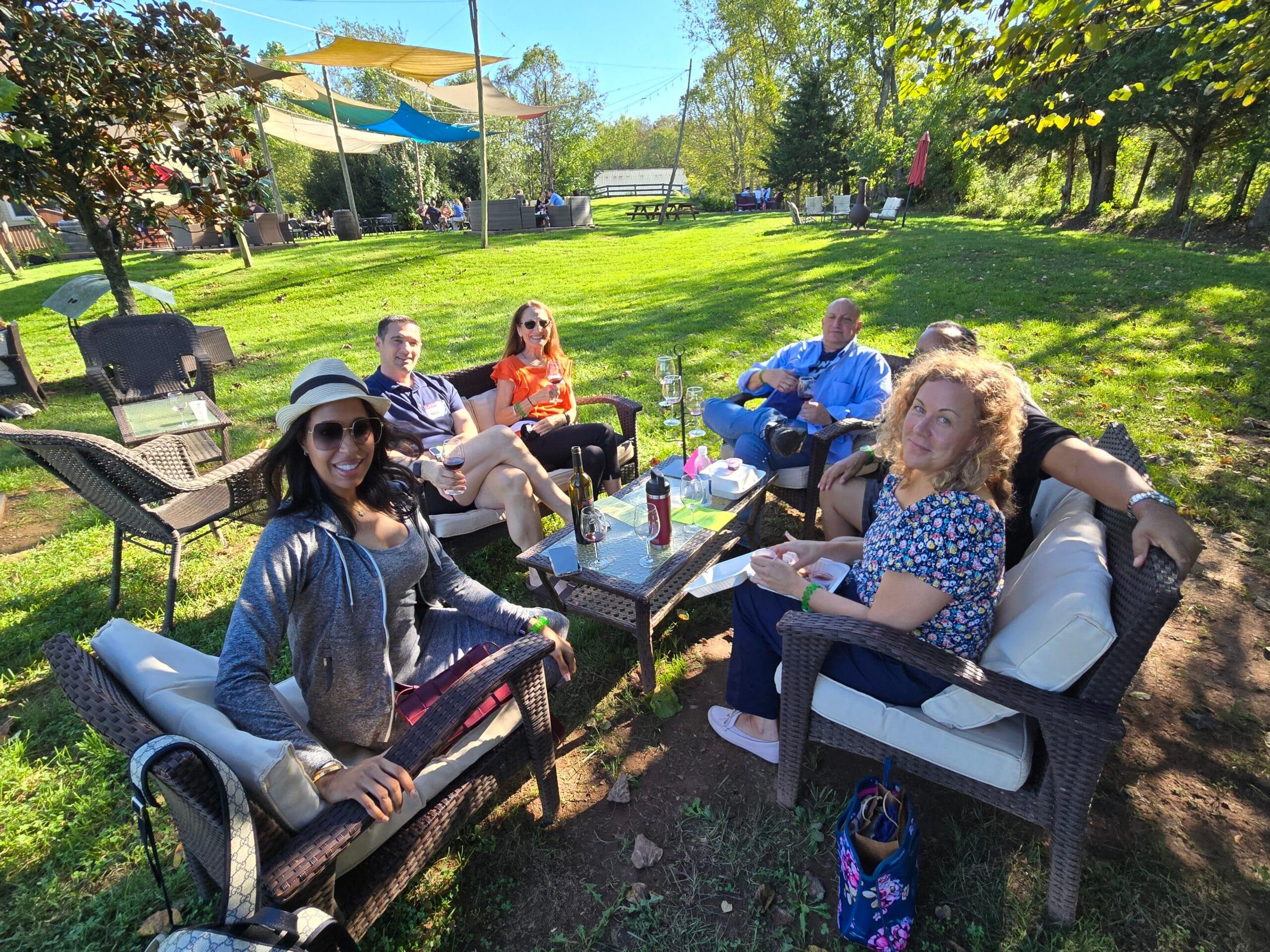
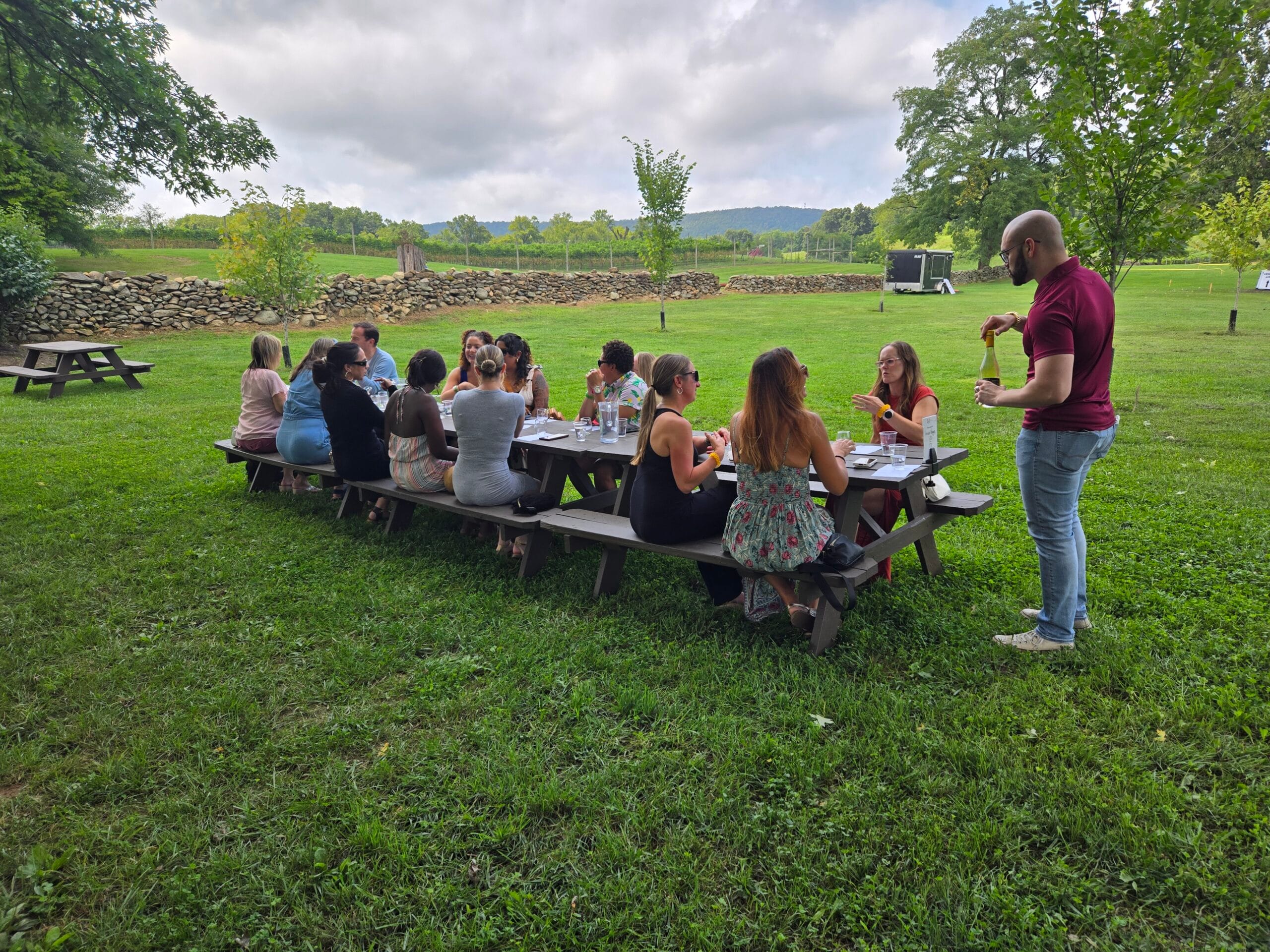
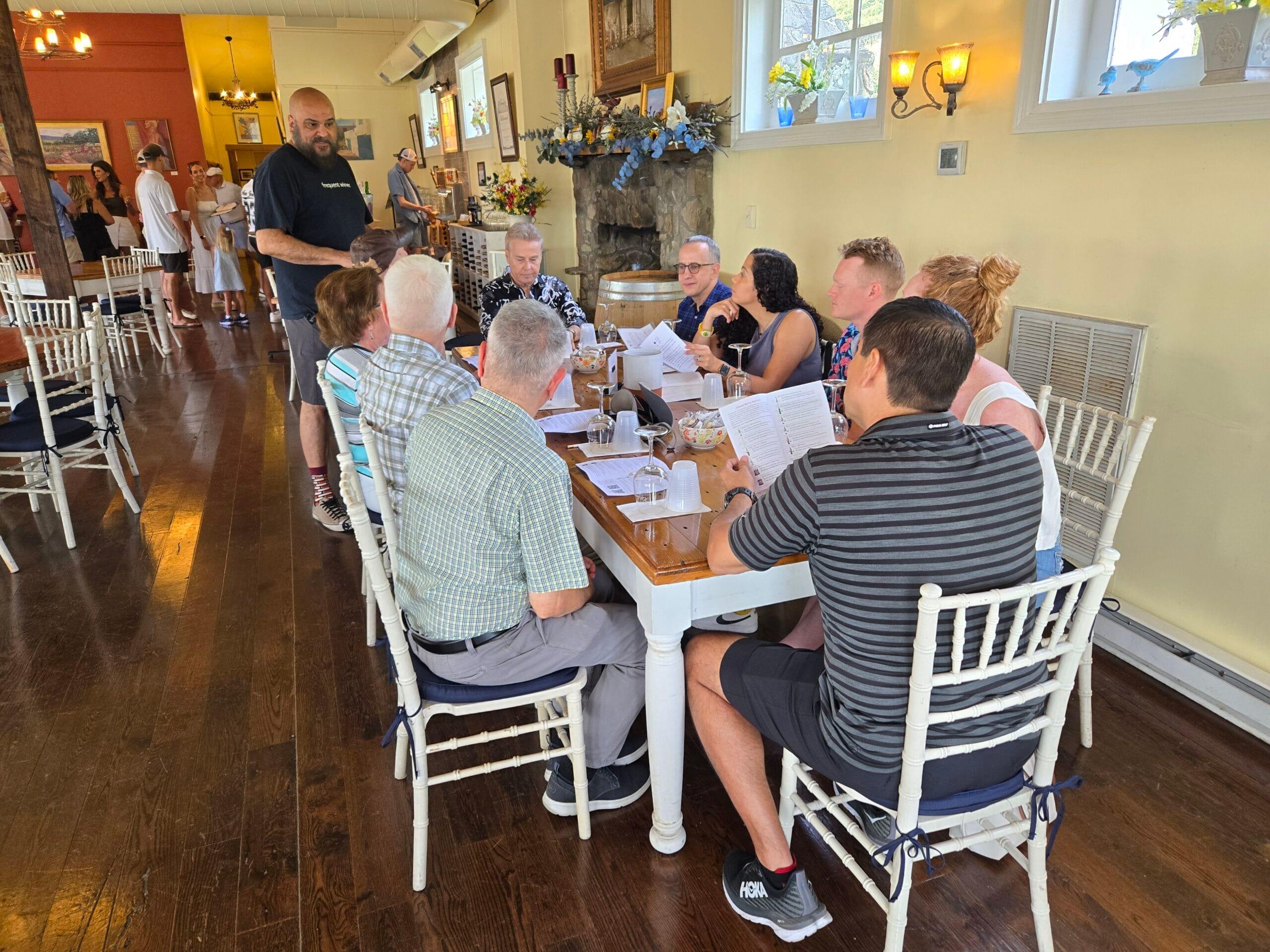
Picture the experience
The best route leaves room to enjoy where you are.
A Virginia wine tour should include time for the wine, the landscape, the people you are with, and the practical details that keep the day comfortable.
Choose the planning model
Scheduled tour, private tour, or self-planned day?
The right format depends on how much flexibility you need and how much of the coordination you want to handle yourself.
Scheduled Group Tour
Join a set date, pickup point, and winery route. This is usually the simplest option when you want transportation and an organized day without paying for a private vehicle.
- Fixed schedule and route
- Shared transportation
- Clear ticket options
Private Coordinated Tour
Build the day around your group, preferred pickup, timing, and atmosphere. Transportation, venue coordination, food, and tastings depend on the final proposal.
- Custom pickup and return
- Right-sized vehicle
- Flexible route planning
Self-Planned Wine Day
Choose the wineries, make reservations, manage the route, and assign a sober driver. This can work well when the group is small and someone genuinely wants to handle the logistics.
- Full control of stops
- Separate reservations
- Designated-driver planning
A comfortable day-trip rhythm
Two or three wineries is usually enough.
A strong itinerary gives the group time to settle in, taste, eat, and enjoy the setting instead of spending the day watching the clock.
This is an illustrative planning sequence, not a fixed Vineyard Voyages itinerary. Times, venues, food, tastings, and inclusions vary by region and final arrangements.
Meet & Depart
Begin from one practical pickup point. Confirm the return time before the first glass is poured.
First Tasting
Use the first winery for a structured tasting or an introduction to the region’s wine styles.
Food & Wine
Plan lunch or substantial food at the stop best equipped to serve the group.
A Different Setting
Choose a final venue with a contrasting atmosphere, view, or wine focus.
Travel Back Safely
Leave enough buffer for purchases, traffic, and a relaxed return to the agreed location.
What to look for in the glass
A few Virginia varieties worth knowing.
Virginia grows more than 30 grape varieties. These are approachable starting points when you want to taste what the Commonwealth does especially well.
Cabernet Franc
A signature Virginia red that can show red fruit, herbs, spice, and earthy character. Styles range from bright and fresh to structured and oak-aged.
Petit Verdot
Originally known as a blending grape, Petit Verdot often appears in Virginia as a bold varietal wine with dark fruit, floral notes, and firm structure.
Viognier
An aromatic white associated with stone-fruit flavors and a fuller texture. It can be an inviting choice for guests who usually prefer expressive whites.
Petit Manseng
A high-acid white grape used for both dry and sweet wines. Expect tropical fruit, citrus, and enough freshness to balance richer flavors.
Chardonnay
Virginia wineries produce Chardonnay in many styles, from crisp and minimally oaked to richer versions shaped by barrel fermentation and aging.
Norton & Hybrids
Norton is Virginia’s historic native wine grape, while hybrids such as Chambourcin and Vidal Blanc add resilience and a wider range of local styles.
Before you reserve the stops
Plan the practical details first.
Winery policies differ across Virginia. Confirm the details that can change the day before sending the itinerary to the group.
Confirm whether each winery requires reservations, limits large groups, or uses a separate group-tasting format.
Check whether the winery has a kitchen, food truck, snack menu, or rules about bringing your own food.
Wineries that look close on a map may be separated by winding roads. Build the route around geography, not just a wish list.
Ask about non-alcoholic choices and food accommodations in advance instead of assuming every venue offers the same options.
Virginia weather changes quickly. Confirm that the route still works when the patios are not the best place to sit.
Use a professional driver or choose a designated driver who will remain sober for the entire route.
Where Vineyard Voyages fits
Our scheduled focus is Northern Virginia wine country.
Vineyard Voyages does not present one public tour as though it covers the entire Commonwealth. Our scheduled experiences focus on Loudoun County, with clear pickup options and rotating winery routes.
Northern Virginia Tours
Compare scheduled ticket options, pickup points, and the three-winery experience.
Explore Northern Virginia toursFrom Washington, DC
See how scheduled guests use Metro to reach the West Falls Church pickup.
Plan from WashingtonFrom Leesburg
Begin closer to wine country with the scheduled Market Station pickup.
Explore Leesburg toursPrivate Groups
Request a customized private experience with pickup, vehicle, timing, and venue options shaped around the group.
Explore private toursVirginia wine-tour questions
What should you know before choosing?
Which Virginia wine region is best for a first visit?
Choose the region that fits where you are staying. Northern Virginia is the most practical day trip from the Washington area. Central Virginia and Monticello work well from Charlottesville, while the Shenandoah Valley is better for a scenic road trip or overnight stay.
How many wineries should we visit in one day?
Two or three wineries is a comfortable target for most groups. Three stops can fill a full day once you include driving, check-in, tastings, food, purchases, and photographs.
Are tastings included in every Virginia wine tour?
No. Every operator and ticket type is different. Vineyard Voyages distinguishes between scheduled ticket options, and private-tour tastings or food should not be assumed included unless they appear in the final confirmed package.
Do Virginia wineries require reservations?
Policies vary by winery, date, and group size. Many venues require advance arrangements for larger groups, while smaller parties may have more flexibility. Confirm each stop directly before finalizing a self-planned route.
Can non-drinkers join a wine tour?
Yes, but available non-alcoholic options vary by venue. Ask in advance when a guest needs a particular beverage or food accommodation.
Does Vineyard Voyages offer scheduled tours throughout Virginia?
No. Vineyard Voyages’ scheduled tours currently focus on Loudoun County in Northern Virginia, with pickup options at West Falls Church Metro and Leesburg Market Station. Private experiences are discussed separately based on the group’s needs and final proposal.
What is the difference between a scheduled and private wine tour?
A scheduled tour uses established dates, pickup points, routes, and ticket options. A private tour can offer custom pickup, a right-sized vehicle, and a day shaped around the group, subject to availability and the final proposal.
Ready to turn research into a day out?
Start with the Virginia wine-tour option closest to you.
Join a scheduled Northern Virginia tour, begin from Leesburg or the Washington area, or request a private experience designed around your group.